Use your own generation
Run everyday loads from rooftop solar when the system is producing.
Residential solar
A well-designed solar system can supply more of your household's electricity from your own roof. We design around your home, your usage and what you want the system to do—now and in the years ahead.
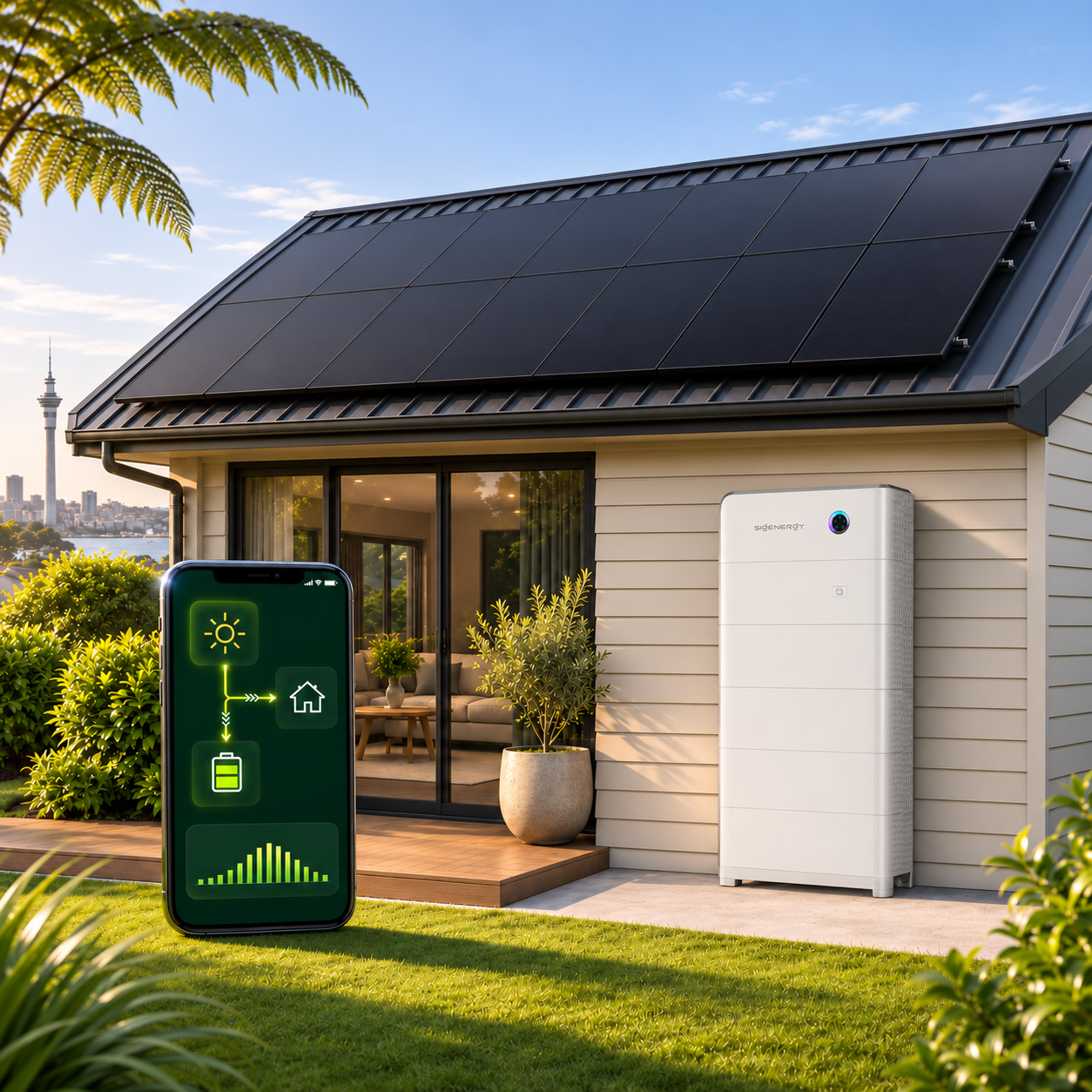
Why residential solar
Solar panels generate electricity whenever there is usable daylight—not only in full summer sun. Your home uses that electricity first, reducing the amount drawn from the grid at that moment.
The best results come from matching generation to the way your household uses power. That is why we start with your actual energy profile, rather than a one-size-fits-all package.
Run everyday loads from rooftop solar when the system is producing.
Allow for future loads such as an EV charger, heat pump or electric hot water.
Monitor generation and consumption, where supported by the selected system.
How it works
During daylight hours, the system continually balances what your panels produce with what your home needs.
Roof-mounted panels convert daylight into direct-current electricity.
An inverter converts that power into AC electricity for your household circuits.
Appliances use available solar generation before drawing additional power from the grid.
Surplus may charge a battery or export to the grid; shortfalls are supplied by the grid.
Grid export and buy-back arrangements depend on your electricity retailer, metering and network requirements.
System sizing & options
Panel count alone does not define a good system. We consider when you use electricity, available roof area, orientation, shading, your switchboard and any future energy plans.
A grid-connected system focused on supplying daytime household use, with monitoring included where compatible.
Plan the inverter and electrical design so storage can be considered later without boxing in your options.
Generate, store and manage energy as one integrated system, designed around your objectives.
Solar + battery
A battery can store surplus solar for use later in the day, help reduce grid imports at selected times, and—when specifically designed and configured for it—support nominated circuits during an outage.
Battery capacity, power output and backup behaviour vary by product and installation. We explain these limits clearly before recommending a system.
Why Highway Solar
Your solar system becomes part of your home's electrical installation. We approach it that way from the first inspection through to commissioning.
Powered by Highway Electrical
We assess the wider installation, not just the available roof space.
Equipment and layout are selected for your property and stated goals.
You know what is included, how the system will operate and what happens next.
A team you can contact after commissioning as questions or needs change.
Installation process
A structured process keeps the design, approvals and installation clear.
We discuss your goals, review usage and assess the property.
We prepare a tailored system layout, equipment selection and proposal.
We confirm scope and coordinate applicable metering or network steps.
Our team installs, tests and commissions the system with care.
We explain operation, monitoring, documentation and ongoing support.
Frequently asked questions
Every home is different. A site assessment is the best way to turn these general answers into a practical recommendation.
Yes. Panels generate whenever there is usable daylight, although output varies with season, weather, temperature, orientation and shading. We model expected generation using the specifics of your site.
In a standard grid-connected system, the home automatically draws the balance from the grid. If generation exceeds current use, surplus may be exported or stored in a compatible battery.
Not by default. Most grid-connected solar systems shut down during an outage for network safety. Backup requires compatible battery equipment, changeover hardware and circuits designed for that purpose.
We review your energy use, when that use occurs, roof constraints, budget and future plans. The recommendation is based on those inputs—not simply filling all available roof space.
Requirements depend on the network, retailer, metering and the existing installation. We identify the applicable steps for your property and include the relevant electrical scope in the proposal.
It depends on your usage and priorities. We can compare solar-only, battery-ready and integrated storage approaches, including the operational limits of each.
Free solar assessment
Tell us a little about your property, energy use and goals. We’ll review the basics and recommend a sensible next step—without pressure.